How to Choose the Best Childrens Dressing Table?
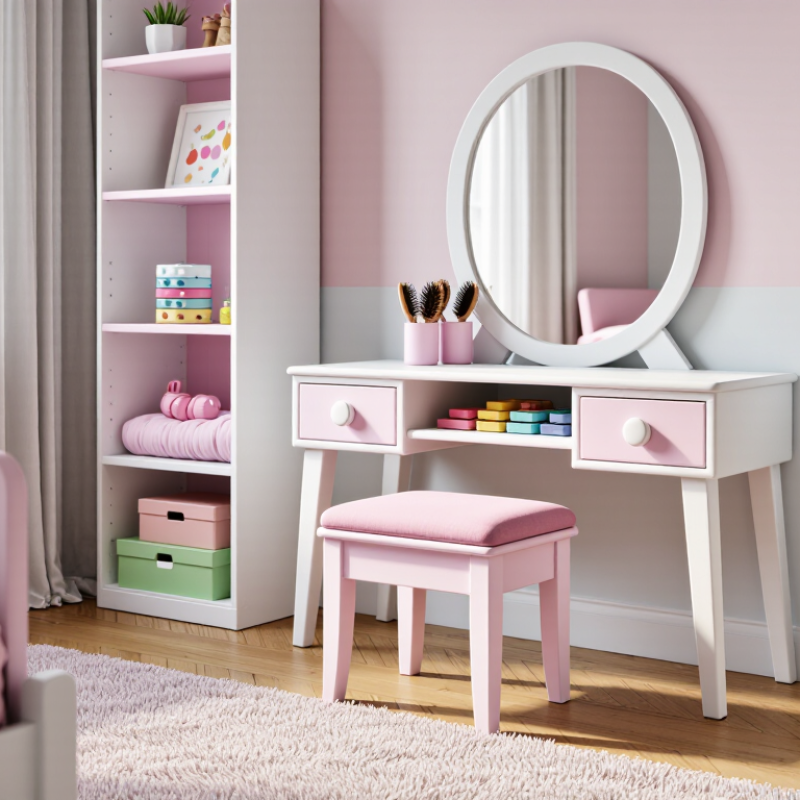
Choosing the right Childrens Dressing Table is not only about color, shape, or bedroom style. It is about creating a small, dependable space where a child can dress, arrange hair, and practice independence safely. A pink finish may look charming, but unstable legs, sharp corners, or a heavy mirror can create serious concerns. The best choice balances comfort, construction, storage, and everyday supervision.
Furniture safety specialist and former U.S. Consumer Product Safety Commission Chair Alex Hoehn-Saric has stressed, “Anchor furniture to the wall.” This simple guidance deserves attention when comparing a Childrens Dressing Table. Look for a stable frame, rounded edges, secure drawers, and a properly fixed mirror. Check whether the table stays steady when a child opens several drawers. Test the handle size with small hands. Examine the finish closely for peeling paint or strong chemical odors.
Age matters. A tall table may suit an older child but feel unsafe for a preschooler. A low stool may be attractive, yet it should not slide easily across a polished floor. Storage also needs thought. Open shelves encourage visibility, while drawers hide clutter and may invite climbing. There is no perfect checklist. Parents can overlook tiny details, especially when buying online. Product measurements, weight limits, assembly instructions, and independent safety information should be reviewed carefully. A beautiful table is still a poor choice if it becomes unstable after assembly. This guide explains how to compare practical features, avoid common mistakes, and choose a Childrens Dressing Table that supports confidence without sacrificing safety.
Define the Child’s Age, Height, and Intended Dressing-Table Activities
How to Choose the Best Children’s Dressing Table?
A child’s age should guide the dressing table’s size, storage, and safety features. Toddlers need low, stable furniture with rounded corners and limited-access drawers. Older children may use mirrors, hairbrushes, costume accessories, or small writing supplies. Their activities should determine the table’s layout.
Measure the child while standing and sitting. The tabletop should sit near the child’s elbow when seated. This position reduces shoulder lifting and awkward wrist bending. Leave enough knee space underneath. A child should reach the mirror without stretching or climbing. Never treat a chair as a permanent step. It can slide unexpectedly.
Check the table’s depth against the room and the child’s reach. Deep drawers may look useful, but they can encourage unsafe pulling. Choose smooth runners and secure the furniture to the wall when possible. Keep heavy items low. My practical mistake was focusing on mirror size first; the table later felt too tall for daily use. Children also change quickly, so allow modest height flexibility without creating unstable adjustments. A simple measuring check every few months can reveal poor posture, cramped legs, or unused storage. Fancy details matter less when the child cannot comfortably reach the essentials.
Match Table Dimensions with ASTM F1169 Ergonomic Safety Principles
How to Choose the Best Children’s Dressing Table?
Match the table’s dimensions with careful safety thinking. ASTM F1169 applies to full-size cribs, not children’s dressing tables, so it does not provide a dressing-table height formula. However, its safety focus offers useful guidance: stable construction, secure hardware, controlled openings, and smooth surfaces. Use these principles as a reference, not as proof of compliance.
Measure the child while seated. Their feet should rest comfortably, and their knees should fit beneath the tabletop without pressure. A shallow tabletop keeps mirrors and small items within reach. A wide base helps prevent tipping when a child leans forward. Avoid narrow legs, loose drawers, sharp corners, and gaps that could catch fingers or clothing. Check every fastener by hand. Movement is a warning.
Tips: Choose a height that supports relaxed shoulders and straight wrists. Keep the table away from windows, cords, and climbable furniture. Anchor it when the design allows. Test the drawers several times before use. Some “child-sized” tables are still too tall for younger children, which is easy to overlook. Read the manufacturer’s measurements, inspect the finish for peeling, and reassess the fit as the child grows. There is no perfect size for every child.
How to Choose the Best Children's Dressing Table?
Match table dimensions with child-friendly ergonomic and safety principles
The chart shows practical screening targets in millimetres for different child age bands. Lower work-surface heights support independent use, while adequate knee clearance and a manageable tabletop depth improve posture and reach. These are design targets rather than mandatory limits. ASTM F1169 is a full-size crib safety standard and does not prescribe dressing-table dimensions; use applicable furniture tip-over and stability requirements, including ASTM F2057 where relevant, alongside age-appropriate ergonomic sizing.
Check Stability Against CPSC 16 CFR 1261 Tip-Over Requirements
How to Choose the Best Children’s Dressing Table?
A children’s dressing table should remain stable during ordinary use and unexpected movement. Check whether its design falls within the scope of CPSC 16 CFR 1261. This rule covers certain clothing storage units, especially units 27 inches or taller. A dressing table with drawers may qualify, depending on its structure and intended use. Do not assume that a child-sized product is automatically exempt.
Look for clear test documentation, not only a general safety statement. Ask whether the finished unit passed the applicable tip-over stability testing. Inspect the base, drawer stops, and anchoring hardware. A wide footprint helps. So does a low center of gravity.
Place the table on a level floor, open the drawers, and check for rocking. Even a small wobble matters. Pulling one loaded drawer can shift the center of gravity quickly. Children may also climb, lean, or hang from the edge.
Read the warning label and anchoring instructions carefully. The restraint should connect to a suitable wall structure, not just thin decorative paneling. Keep heavier items in lower drawers. Remove tempting objects from the top surface.
In practice, I once focused too much on attractive edges and overlooked drawer weight. That was a useful correction. Appearance is not stability. If test records, scope information, or installation directions are unclear, pause before buying and request written clarification from the seller or manufacturer.
Evaluate Materials Using EN 71-3 and ASTM F963 Chemical-Safety Limits
How to Choose the Best Childrens Dressing Table?
Chemical safety should guide your choice, not only appearance. A children’s dressing table may contain painted wood, plastic trim, metal fasteners, or decorative coatings. Ask whether each material was assessed under EN 71-3 or ASTM F963, when relevant. EN 71-3 evaluates the migration of certain elements from accessible materials. ASTM F963 also sets chemical limits for children’s products, including specific substrate and coating requirements. These standards are not automatically interchangeable. Product classification and selling location matter.
Request a current laboratory report, not a general safety statement. Check the tested material, coating color, production date, and applicable standard version. Pay close attention to accessible painted edges, drawer handles, mirror frames, and small decorative parts. Lead, cadmium, mercury, chromium, and other restricted elements may be relevant, depending on the material. A smooth finish can look reassuring, but appearance proves little. Testing evidence is stronger. Still, reports may cover samples rather than every production batch. That limitation deserves honest attention.
Tips: Inspect chipped paint, strong odors, and rough edges before purchase. Confirm that the report matches the exact model and finish. Ask whether recycled plastic or reclaimed wood was used, since composition can vary. Do not assume “non-toxic” means tested against EN 71-3 or ASTM F963. If the table is designed as a toy, additional toy-safety requirements may apply. A qualified compliance professional can review uncertain cases, especially when the product crosses markets.
Compare Storage, Rounded Edges, Load Ratings, and Wall-Anchoring Features
How to Choose the Best Children’s Dressing Table?
A good children’s dressing table should fit the room, the child, and daily routines. Measure the tabletop height before buying. A surface around the child’s waist may support safer use and better posture. Check storage carefully. Shallow drawers suit hair accessories, while deeper compartments hold folded clothing. Smooth runners matter because stiff drawers can trap small fingers. Rounded edges reduce sharp contact during hurried play, although they cannot prevent every injury.
Load ratings deserve close attention. Check the maximum weight for the tabletop, drawers, and any attached mirror separately. A heavy object placed near one edge can make the table unstable. Do not assume a wider table is automatically stronger. The materials, joints, and base design matter more. Wall-anchoring hardware is an important safety feature, especially on tall units. Follow the fitting instructions, use suitable wall fixings, and inspect the anchor after moving the furniture. A table may look stable but still tip when a child climbs.
Tips: Keep heavier items in lower drawers. Leave the tabletop mostly clear. Test every drawer before use. Place the table away from windows, heaters, and climbable furniture. Avoid storing glass containers within reach. Check the table every few months for loose screws or widening joints. My earlier preference for maximum storage was not always wise; crowded drawers encouraged pulling and climbing. Simpler storage can be safer.