How to Choose a Childrens Dressing Table?
Choosing a Childrens Dressing Table involves more than matching colours with a bedroom. It means considering safety, proportions, storage, cleaning, and daily habits. A beautiful table can still become unstable, crowded, or difficult to supervise. That uncomfortable detail matters.
Dr. Gary Smith, a recognised paediatric injury-prevention expert, has said, “Furniture tip-overs are preventable.” This reminder should guide every buying decision. Look for a strong frame, rounded corners, smooth drawer runners, and a supplied wall-anchoring system. Test the table gently before purchase. It should not wobble when a child opens several drawers. Small parts, loose mirrors, and sharp handles deserve careful attention too.
Measure the available wall space first. Leave enough room for a child to sit, stand, and move safely. A low table may suit younger children, while older children may need deeper storage and a taller mirror. However, age labels are only general guidance. Children grow differently. Their reach, balance, and supervision needs should influence the final choice.
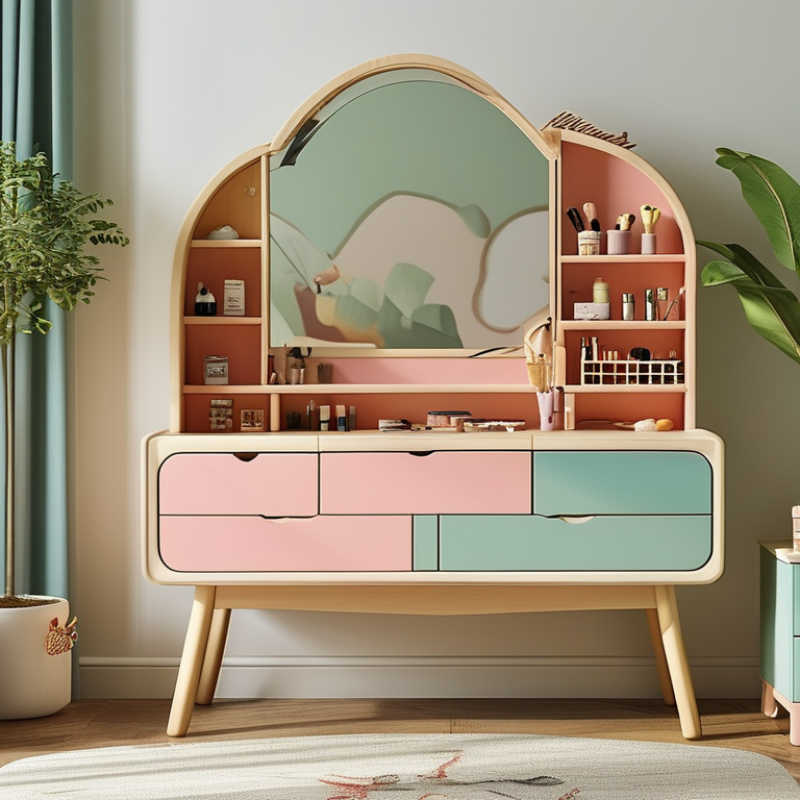
Storage should support real routines. A shallow drawer can hold brushes, clips, and folded accessories. Open shelves allow quick access but collect dust faster. Painted surfaces are practical, though pale finishes may show fingerprints and makeup marks. We should admit that no design solves every problem. Even the safest Childrens Dressing Table needs regular checks, adult guidance, and occasional tightening of screws. The best choice balances charm with stability, usable space, and long-term confidence.
Understanding the Purpose and Age Range of a Children’s Dressing Table
How to Choose a Children’s Dressing Table?
A children’s dressing table should match the child’s purpose, not only the bedroom style. For
ages two to four, it can support pretend play and simple routines. Choose a low, stable table with rounded edges and a shatter-resistant mirror. Young children need close adult supervision. Small drawers should open smoothly and avoid sharp metal parts.
Between ages five and eight, children often use the table for brushing hair, organizing clips, or preparing school clothes. The surface should remain clear enough for daily tasks. For ages nine and above, consider more storage and a stronger chair. Their needs change quickly, so an adjustable stool may provide better value. In my experience, parents often choose furniture that looks attractive but becomes too small within one year. That mistake is easy to make.
Tips
Measure the child’s seated height before buying. Their feet should rest comfortably, not swing above the floor. Check that the table does not wobble when gently pushed. Secure taller units to the wall, especially in active bedrooms. Select certified, low-emission materials when possible, and inspect hinges regularly. Avoid overcrowding the tabletop. A simple tray can hold brushes, tissues, and small accessories. Leave enough walking space around the furniture. Safety matters more than decoration, although children may disagree.
Checking Size, Materials, Stability, and Child-Safe Design
How to Choose a Children's Dressing Table?
Size should match the child and the room. Measure the available floor space before shopping. A child’s feet should rest comfortably on the floor while seated. The tabletop should be reachable without stretching. Leave enough space for drawers and movement. Crowded furniture can create avoidable bumps.
Materials affect durability and daily safety. Solid wood feels firm, while quality plywood can reduce weight and cost. Avoid sharp corners, splintered surfaces, and strong chemical odors. Look for smooth, sealed finishes that are easy to wipe clean. A mirror should be made from shatter-resistant material or secured behind a protective frame. Small handles also reduce snagging risks.
Stability matters more than appearance. Test the table by gently pressing each corner. It should not rock or slide. Wide legs and a low center of gravity usually provide better support. Secure the unit to the wall when possible, especially if it has drawers or a mirror. Check drawer stops, hinge gaps, and exposed screws. These details are easy to miss. I once assumed a heavier table was automatically safer, but weight alone does not prevent tipping. Child-safe design also means avoiding detachable tiny parts and choosing rounded edges. Ventilation matters if cosmetics or scented items are stored nearby. Inspect the table regularly, because screws loosen and children grow faster than expected.
How to Choose a Children's Dressing Table?
Checking size, materials, stability, and child-safe design starts with choosing a tabletop height that suits the child’s age and body size.
Size guide: These commonly used practical reference heights are approximate. Always check that the child can sit comfortably with feet supported and use the table without stretching.
- Materials: Choose durable, low-emission wood or engineered wood with a smooth, easy-to-clean finish.
- Stability: Look for a wide base, strong joints, and an anti-tip anchor for securing the table to the wall.
- Child-safe design: Prefer rounded corners, smooth edges, soft-close drawers, secure mirrors, and no loose small parts.
Choosing Storage Features That Match a Child’s Daily Needs
A children’s dressing table should store what a child uses every day, not everything adults hope to organize. Observe the morning routine for several days. Hairbrushes, clips, tissues, and small books often need the fastest access. Open shelves suit frequent items. Shallow drawers work better for private or easily scattered objects. Keep handles large enough for small hands, but avoid sharp edges and loose hardware.
I once assumed more drawers meant better storage. That assumption was wrong. Too many compartments can confuse a young child and encourage messy overflow. A practical layout may include one open shelf, two shallow drawers, and a small cup for brushes. Place daily items between the child’s shoulder and hip height. Heavier objects should stay low. The U.S. Consumer Product Safety Commission reported an estimated annual average of about 15,400 furniture tip-over injuries among children and teenagers from 2017 to 2019. Secure the table to the wall, especially when drawers open fully.
Storage should also match changing habits. A preschooler may need picture labels, while an older child may prefer divided sections for accessories and school materials. The American Academy of Pediatrics recommends anchoring unstable furniture and keeping climbing temptations away. Leave some empty space. It allows the system to adapt. My own weak point is overplanning: children rarely follow an adult’s perfect arrangement. Check the table weekly, remove unused items, and let the child help decide where essentials belong.
Evaluating Style, Maintenance, and Room Compatibility
How to Choose a Childrens Dressing Table?
Style should serve the room, not dominate it. Measure the available wall, chair space, and drawer clearance before shopping. A compact table suits a narrow bedroom, while rounded edges soften a busy playroom. Choose finishes that match existing furniture, but avoid overly delicate details. Children use furniture energetically.
I learned this the hard way.
Safety and maintenance deserve equal attention. The U.S. Consumer Product Safety Commission reported 71 child deaths and an estimated 19,400 annual emergency-department injuries linked to furniture, televisions, or appliances tipping over between 2018 and 2020. Select a stable unit, secure it properly, and check whether drawers include anti-tip features. Look for products tested against applicable furniture safety standards. Do not rely on appearance alone.
Surface care affects indoor comfort, too. The U.S. Environmental Protection Agency reports that indoor pollutant levels can be two to five times higher than outdoor levels. Prefer low-odor finishes and wipeable, sealed surfaces. A damp microfiber cloth usually handles fingerprints and spilled lotion. Avoid harsh cleaners that may damage coatings. Inspect loose handles, chipped edges, and wobbly legs monthly. My own mistake was choosing pale fabric storage beside a craft area; stains appeared within days. Practicality sometimes matters more than a perfect photograph.