Leave Your Message

2026 Best Barn Door TV Stand for Global Buyers

Choosing the 2026 Best Barn Door TV Stand for Global Buyers requires more than attractive farmhouse styling. Buyers now compare storage, durability, dimensions, and delivery reliability across markets. Grand View Research continues to identify furniture as a major global consumer category, supported by home renovation and online retail demand. Statista Market Insights also reports sustained growth in worldwide e-commerce, making product information increasingly important for international purchasing decisions.

A reliable Barn Door Tv Stand should fit real homes, not only showroom photographs. Check width, height, depth, shelf clearance, and maximum television weight. Measure in both centimeters and inches. Confirm VESA compatibility separately, because a console does not replace a certified wall mount. Cable openings should accommodate power cords, streaming devices, and game consoles without sharp bends. Small details matter.

The doors should slide smoothly, without scraping the floor. The frame should resist wobbling. Engineered wood can perform well, but edge sealing and hardware quality deserve close inspection. FSC-certified wood may support more responsible sourcing, although certification claims should be verified through official documentation. Shipping data from global furniture retailers also shows why packaging deserves attention. Corner protection, moisture barriers, and clear assembly instructions can reduce avoidable damage.

No single report captures every household. That is worth remembering. Room size, voltage standards, local delivery conditions, and viewing habits vary widely. A useful comparison should therefore balance professional specifications with hands-on experience. This guide examines leading 2026 models through that practical lens, while acknowledging that style alone cannot prove long-term value.

2026 Best Barn Door TV Stand for Global Buyers

What Is a Barn Door TV Stand?

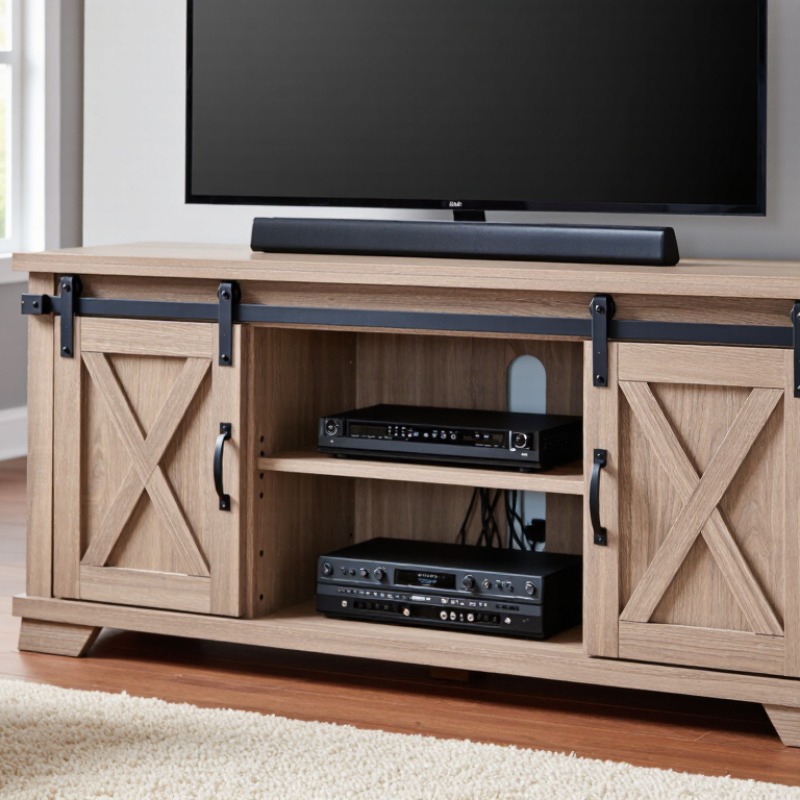
A barn door TV stand is a media console with sliding doors inspired by traditional barn entrances. The doors usually move along a visible metal track. Behind them, shelves hide game systems, routers, books, or remote controls. Its rustic appearance comes from framed panels, wood-grain surfaces, and dark hardware.

In practical use, the sliding design saves front space because the doors do not swing outward. Measure the television width, wall clearance, and viewing height before choosing one. A stand should extend beyond the screen on both sides. This improves visual balance and reduces accidental bumps. Check the shelf openings carefully. Some modern devices need more ventilation than expected. Heat can collect behind closed doors.

Material quality varies widely. Engineered wood can offer consistent panels and easier cleaning, while solid wood may show richer grain and natural movement. Neither option is automatically better. Humidity, assembly quality, and the load rating matter more than appearance alone. I would inspect the track hardware, screw fittings, cable openings, and rear ventilation before purchase. Small details matter.

It can feel heavier than expected.

Global buyers should confirm metric dimensions, packaging protection, assembly instructions, and delivery conditions. A beautiful finish may arrive scratched if corner protection is weak. Door alignment can also require patience, especially on uneven floors. That is an overlooked drawback. Adjustable feet or small felt pads often help, but they do not fix a poorly assembled frame.

Key Features to Consider for Global Buyers

2026 Best Barn Door TV Stand for Global Buyers

Key Features to Consider for Global Buyers

A reliable barn door TV stand begins with accurate measurements. Check the television width, wall clearance, and shelf depth before ordering. A 55-inch screen needs more than a matching label. Leave space for airflow around streaming devices and game consoles. Small details matter. The International Energy Agency reports that standby power can represent 5–10% of household electricity use. Therefore, open cable channels and accessible power management are practical features, not decorations.

Material quality also affects international purchasing decisions. Look for stable engineered wood, reinforced joints, smooth door tracks, and a tested load rating. A heavy television can expose weak construction quickly. The European Commission’s 2024 consumer research continues to highlight durability and repairability as important sustainability concerns. Buyers should inspect panel thickness, hardware instructions, and replacement-part availability. I would not trust a product photo alone. It can hide uneven doors or fragile backing.

Shipping deserves equal attention. The UNCTAD Review of Maritime Transport 2024 describes continuing volatility in global container shipping, making compact packaging and strong corner protection valuable. Flat-pack designs can reduce shipping volume, but assembly quality still depends on clear diagrams and labeled parts. Check voltage-related storage needs, regional plug access, and ventilation before installation. Also review language options, carton dimensions, and return handling. These choices may seem minor, yet they shape the ownership experience across borders. Perfect packaging is unrealistic. Better inspection is not.

2026 Best Barn Door TV Stand for Global Buyers

Key Features to Consider for Global Buyers

The chart estimates the visible panel width of common 16:9 television sizes. Global buyers should choose a barn door TV stand that is wider than the television, confirms the manufacturer’s weight rating, provides suitable storage, and fits the destination’s room and electrical requirements. Widths are calculated from the standard 16:9 screen aspect ratio and rounded to one decimal place.

How to Choose the Right Size, Material, and Style

2026 Best Barn Door TV Stand for Global Buyers

How to Choose the Right Size, Material, and Style

Measure the television, wall, and viewing distance before choosing a barn door TV stand. A 65-inch screen is usually about 145 centimeters wide, but bezels vary. Choose a stand at least 15 centimeters wider on both sides. It should also support the television’s actual weight, not only its screen size. For comfortable viewing, SMPTE guidance commonly uses a 30-degree horizontal viewing angle. In a small apartment, a lower stand may reduce neck strain. Measure twice. I still sometimes underestimate cable depth.

Material affects durability, humidity resistance, and maintenance. Solid wood offers natural grain and repairability, while engineered wood can provide stable dimensions at a lower cost. Steel frames add strength but may feel visually cold. Check panel thickness, door tracks, ventilation openings, and formaldehyde compliance for your destination market. EPA rules under TSCA Title VI regulate formaldehyde emissions from composite wood products in the United States. Safety deserves more attention than rustic appearance. The U.S. Consumer Product Safety Commission reported approximately 22,000 annual tip-over injuries involving televisions, furniture, and appliances among children from 2018 to 2020. Use anti-tip hardware where suitable.

Style should serve daily use.

Barn doors need enough side clearance and smooth tracks. They can block remotes or ventilation when fully closed. Nielsen’s July 2024 Gauge report measured streaming at 41.4% of U.S. television usage, so plan space for streaming devices, power strips, and airflow. Cable openings matter. A farmhouse finish may look attractive, but dark colors reveal dust quickly. That small detail is easy to regret.

Comparison of Storage, Durability, and Assembly Options

2026 Best Barn Door TV Stand for Global Buyers

A barn door TV stand should balance enclosed storage, frame strength, and assembly effort. Global furniture revenue exceeded US$700 billion in 2024, according to Statista Market Insights. That scale shows demand, but TV stands remain a narrow category. Broad data can mislead.

Look for adjustable shelves, cable openings, and doors that hide remotes or game accessories. A 55-inch television needs a stand wider than its screen, with a stable center of gravity. Engineered wood offers consistent panels, while solid wood usually handles repeated fastening better. However, wood can expand in humid rooms. Check panel thickness, hinge quality, and the stated load rating. Industry guidance from BIFMA emphasizes performance testing, stability, and durability for furniture used daily. A higher rating is useful, but only when tested under realistic conditions.

Tips: Measure the wall, skirting board, and device depth before ordering. Choose pre-drilled panels and numbered hardware for faster assembly. Two adults are safer for lifting large units. Some flat-pack products promise quick installation, yet door alignment may still require patience. This is an overlooked weakness. For international buyers, verify metric dimensions, translated instructions, spare-hardware policies, and the required tool set. The 2024 Global Consumer Insights Pulse Survey by PwC also indicates that shoppers increasingly examine value and product information before purchasing. Clear specifications build trust more effectively than decorative claims.

Buying, Shipping, and Care Considerations for 2026

2026 Best Barn Door TV Stand for Global Buyers

Buying, Shipping, and Care Considerations for 2026

A strong barn door TV stand needs more than attractive wood grain. Measure the television, soundbar, wall clearance, and cable exits before ordering. Allow at least five centimeters around ventilation openings. The World Bank’s Logistics Performance Index 2023 identifies reliability, tracking, and delivery timeliness as core supply-chain concerns. Ask the seller for carton dimensions, gross weight, assembly instructions, and replacement hardware. Small details matter.

Shipping deserves careful planning. UNCTAD’s Review of Maritime Transport 2024 reports that ships carry over 80% of global merchandise trade by volume. Sea freight may reduce cost, but longer transit increases exposure to humidity, handling shocks, and port delays. Choose reinforced corners, moisture-resistant wrapping, and internal foam that cannot press against the doors. Confirm whether duties, residential delivery, and inside placement are included. They often are not. A freight estimate can look wonderfully cheap until those charges appear.

Care is practical, not decorative. Keep the cabinet away from radiators and damp floors. Use felt pads, level the base, and anchor tall units to a suitable wall structure. Wipe spills quickly; unfinished timber can stain within minutes. I would prefer tested packaging, yet packaging claims are not always independently verified. Photograph the carton before opening. That habit may feel excessive, but it creates useful evidence when damage is hidden. Inspect hinges after assembly, because slight misalignment can worsen with daily sliding.

2026 Best Barn Door TV Stand for Global Buyers - Buying, Shipping, and Care Considerations for 2026

Evaluation Area Recommended Benchmark Practical Data or Specification Why It Matters Global Buyer Consideration
Buying Considerations
TV Size Compatibility Choose a console wider than the television. For a 55-inch TV, a stand approximately 55–65 inches wide is generally suitable. For a 65-inch TV, consider approximately 65–75 inches. A wider base improves visual balance and reduces the risk of accidental tipping. Check the television’s actual width, not only the advertised diagonal screen size.
Stand Dimensions Match the room, wall, and viewing position. Common full-size dimensions are approximately 55–70 inches wide, 15–18 inches deep, and 24–30 inches high. Depth must allow safe component placement without obstructing walkways. Measure doorways, lifts, staircases, and the final installation area before ordering.
Weight Capacity Select a unit rated above the combined equipment weight. A practical target is at least 100–150 lb (45–68 kg) for the top panel, subject to the manufacturer’s tested rating. Extra capacity helps accommodate the television, soundbar, game consoles, and accessories. Confirm whether the stated capacity applies to the top surface, shelves, or the entire unit.
Construction Material Use stable engineered wood, solid wood, or a combination of both. Engineered wood commonly uses particleboard or medium-density fiberboard with a decorative finish. Solid wood offers natural grain but may expand or contract with humidity. Material quality affects stability, screw retention, moisture resistance, and service life. For humid climates, prioritize sealed surfaces and avoid placing the stand directly against damp walls.
Barn Door Mechanism Choose smooth, aligned doors with a secure track. Look for metal hardware, door stops, anti-jump protection, and a track that remains level after assembly. A properly fitted track reduces noise, derailment, and uneven door movement. Replacement hardware may be difficult to source internationally; check spare-part availability before purchase.
Storage Layout Balance open shelving with concealed storage. A useful layout includes at least one adjustable or open shelf for ventilation and one enclosed compartment for controllers, discs, manuals, or other accessories. Open space improves airflow while doors help reduce visible clutter. Confirm shelf height for local media equipment, electrical adapters, and streaming devices.
Cable Management Use rear openings or cable-routing channels. Rear cable holes should be large enough for power and signal cables; ventilation openings are preferred near enclosed electronics. Organized cables improve airflow and make maintenance easier. Plan for different plug shapes, voltage requirements, and power-strip locations used in the destination country.
Safety and Stability Use an anti-tip restraint whenever possible. Secure the unit to a suitable wall structure with the supplied or correctly selected hardware. Do not rely on the furniture’s weight alone. Anti-tip anchoring reduces the risk of furniture overturning, especially in homes with children or pets. Wall construction differs by region, including masonry, concrete, timber framing, and hollow drywall; select anchors accordingly.
Shipping and Import Considerations
Package Size Review both boxed dimensions and assembled dimensions. Flat-packed furniture is generally easier to transport than fully assembled furniture, but long panels and door tracks may still affect delivery access. Box dimensions determine whether the package can pass through entrances and fit inside a lift. Ask for the longest package length, total package count, and packaged weight before payment.
Shipping Protection Look for reinforced corner and edge protection. Suitable packaging may include corrugated cartons, foam or molded protective inserts, sealed hardware bags, and protective film on finished panels. Edges, corners, glass components, and metal tracks are common points of transit damage. Photograph the package before opening and record any visible damage on the delivery receipt.
Freight Method Select a service appropriate for the package size and destination. Parcel delivery may suit smaller flat-packed units; larger or heavier furniture may require freight, curbside delivery, or room-of-choice service. Delivery level affects handling, labor requirements, and the final placement of the furniture. Confirm whether customs clearance, taxes, duties, and final-mile delivery are included in the quoted price.
Import Documentation Prepare accurate product and value information. Typical information can include product description, quantity, declared value, country of origin, material composition, and commercial invoice details. Clear documentation helps reduce customs delays and unexpected requests for information. Import rules, furniture taxes, and wood-product requirements vary by destination and should be checked locally.
Delivery Inspection Inspect before signing for an undamaged delivery. Check cartons for punctures, crushed corners, water exposure, missing packages, and broken seals. Compare the package count with the shipping documents. Prompt evidence supports damage claims and replacement-part requests. Keep packaging materials until the furniture has been fully assembled and tested.
Assembly Requirements Plan for two-person assembly for large units. Assembly may require a screwdriver, level, mallet, measuring tape, and suitable wall-anchoring tools. Large panels should not be lifted by one person. Correct assembly prevents misaligned doors, unstable shelves, and damaged screw holes. Use local tradespeople when wall anchoring or electrical equipment installation requires specialist skills.
Care and Long-Term Use
Routine Cleaning Use a soft, lightly damp cloth. Remove dust regularly and dry the surface afterward. Avoid abrasive pads, excessive water, bleach, and solvent-based cleaners unless specifically approved for the finish. Harsh chemicals and standing moisture can dull coatings, swell engineered wood, or damage edge banding. Test any new cleaning product on a hidden area first.
Humidity and Temperature Keep the stand in a stable indoor environment. Avoid direct exposure to rain, condensation, heating vents, radiators, and prolonged direct sunlight. Wood-based panels are especially sensitive to moisture changes. Stable conditions help reduce swelling, shrinking, warping, and finish discoloration. Use ventilation or a dehumidifier in damp regions and avoid placing the unit on wet flooring.
Door Track Maintenance Keep the track clean and correctly aligned. Remove dust from the rail, check fasteners periodically, and tighten loose hardware without overtightening. Use lubricant only if the hardware instructions permit it. Clean, level hardware supports quieter and smoother sliding. Keep a record of the track type and screw sizes in case replacement parts are needed later.
Load Distribution Place heavy items low and near structural supports. Avoid exceeding shelf or top-panel ratings. Distribute equipment evenly and do not climb or sit on the unit. Balanced loading reduces stress on shelves, joints, doors, and the overall frame. Recheck stability after moving the stand or installing heavier equipment.
Electronics Ventilation Maintain clear airflow around heat-producing devices. Do not block ventilation openings. Leave clearance around receivers, consoles, routers, and other devices according to their operating instructions. Good airflow helps prevent overheating and can extend electronic equipment life. Regional ambient temperatures may be higher than the conditions used for product testing, so additional airflow may be necessary.
Finish and Color Selection Choose a finish suitable for light exposure and room use. Dark finishes often show dust and fingerprints more easily, while textured or distressed finishes may conceal minor marks better than smooth high-gloss surfaces. Finish selection affects cleaning frequency and the visibility of everyday wear. Color appearance can vary by lighting conditions and display settings; request finish samples when available.
Replacement and Warranty Support Confirm support terms before ordering. Check coverage for damaged panels, missing hardware, door rollers, tracks, and structural defects. Keep the purchase record and assembly instructions. Small replacement parts can often restore a unit without replacing the entire stand. International buyers should confirm service response times, shipping costs for parts, and the applicable legal warranty period.
2026 Selection Checklist
Best Overall Decision Rule Select the widest stable unit that fits the room, supports the equipment, provides adequate ventilation, and can be delivered through the available access route. Before ordering, verify assembled dimensions, boxed dimensions, top and shelf capacities, cable openings, anti-tip hardware, delivery terms, and care instructions.