
Leave Your Message

10 Night Stand With Legs Buying Tips for Global Buyers

Global buyers are paying closer attention to compact bedroom furniture. The Night Stand With Legs category reflects this shift toward practical, adaptable interiors. Grand View Research reports that the global home furniture market was valued at more than USD 220 billion in 2023. It also expects steady growth through 2030. These figures suggest strong opportunity, but they do not guarantee a successful purchase.

Small details matter.

A nightstand can look attractive online yet wobble on uneven flooring. Its legs may scratch wood surfaces, or its drawer may feel weak after repeated use. Buyers should examine dimensions, materials, weight capacity, finish quality, assembly design, and packaging protection. The International Trade Centre and UN Comtrade provide useful trade data for comparing furniture import patterns across major markets. However, product categories differ between databases. That limitation deserves attention.

This guide presents 10 Night Stand With Legs buying tips for international purchasers. It considers supplier experience, construction methods, moisture resistance, hardware performance, and shipping risks. It also highlights responsible sourcing, credible certifications, and product documentation. FSC certification may support responsible wood procurement, while ISO-based quality systems can indicate controlled production processes. Still, certificates should be verified directly.

Reports offer direction.

Hands-on inspection remains valuable. Request clear product drawings, material specifications, sample units, and carton testing results before placing a large order. Compare the quoted price with freight, duties, replacement costs, and expected service life. A cheaper product may become expensive after damage claims or customer returns. No checklist removes every uncertainty. It helps buyers ask better questions and make more defensible decisions.
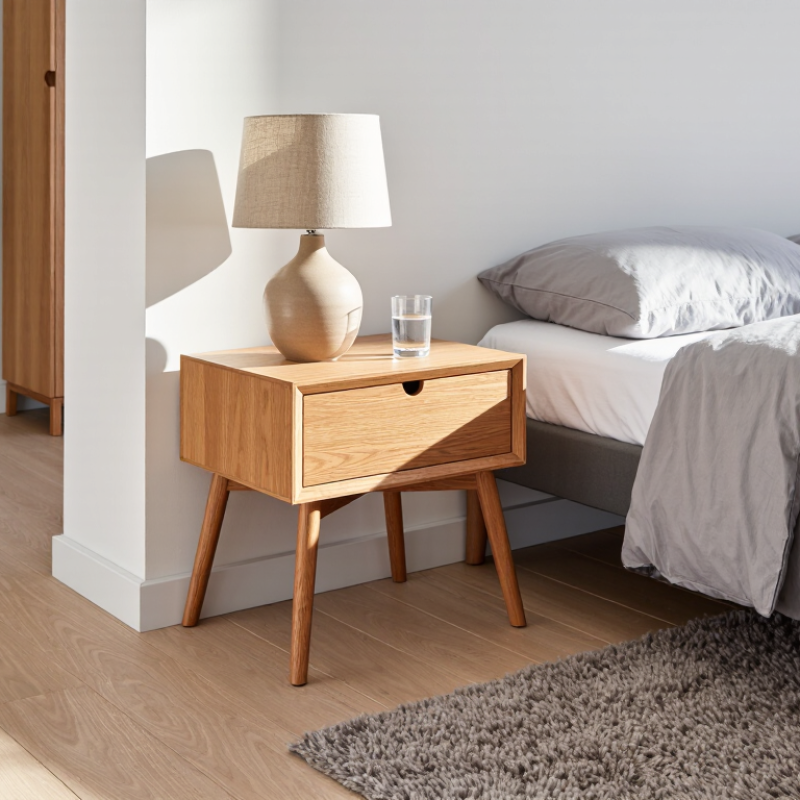
10 Night Stand With Legs Buying Tips for Global Buyers

Understanding Nightstand Size, Style, and Intended Use

10 Night Stand With Legs Buying Tips for Global Buyers

Understanding Nightstand Size, Style, and Intended Use

Measure the bedroom before choosing a nightstand with legs. Allow at least 60 centimeters beside the bed for comfortable movement. Its top should sit level with the mattress, or slightly below it. This prevents awkward reaching for glasses, books, or a phone. Many buyers overlook drawer depth. A narrow drawer may not hold chargers, medication, or reading materials.

Intended use should guide every feature. Choose open shelving for quick access, but select drawers for privacy and dust control. A 2024 Global Wellness Institute report valued the wellness economy at about 6.3 trillion US dollars in 2023. This growth reflects stronger attention to sleep environments, not merely decoration. Look for rounded edges, stable legs, and cable openings near the rear panel. These details matter in daily use. Honestly, an attractive table can still fail when its legs wobble on uneven flooring.

Tips: Check the product’s assembled dimensions, not only the carton size. Confirm whether adjustable feet are included. For international orders, review material certifications, moisture resistance, and assembly instructions. ISO 7170 storage-furniture testing offers useful guidance on strength and durability. Style should support the room, rather than dominate it. Light wood suits compact spaces, while darker finishes create visual weight. Keep a small clearance beneath the table for cleaning tools. You may regret ignoring it.


Checking Materials, Construction Quality, and Weight Capacity

10 Night Stand With Legs Buying Tips for Global Buyers

When evaluating a nightstand, begin with the material, not the finish. Solid wood usually feels stable, while engineered panels need sealed edges against moisture. Metal legs should have an even coating and clean welds. Check whether the surface resists everyday spills, warm cups, and repeated wiping. A beautiful veneer can still fail if its edges lift.

Tip: Press each corner gently. The unit should not rock or twist. Inspect screw joints, leg brackets, drawer runners, and the back panel. Construction quality often appears in hidden areas. A drawer should glide without scraping, and its handle should remain firm after repeated use. I once underestimated thin back panels; they made an attractive table feel surprisingly weak. That was a useful mistake.

Tip: Press each corner gently. The unit should not rock or twist.

Weight capacity needs careful reading. Some sellers list the total capacity, while others specify only the drawer or tabletop. Ask whether the rating includes evenly distributed weight. A lamp, books, and a charging device may create concentrated pressure near one edge.

Tip: Compare the stated load with your real use, then leave a safety margin. Request test information, assembly instructions, package dimensions, and replacement hardware details. International buyers should also confirm measurements in centimeters and inches, plus delivery packaging strength. Small differences matter. A leg that is two centimeters too short can make the nightstand uncomfortable beside a tall bed.

Comparing Leg Designs, Stability, and Floor Protection

For global buyers, a nightstand’s leg design affects more than appearance. In my product checks, splayed legs resisted side movement better than narrow, vertical legs. Four contact points can still wobble. Uneven floors expose weak joints quickly. The CPSC’s 2023 surveillance report estimated 71,300 emergency-department-treated injuries. These injuries involved furniture, televisions, and appliances between 2018 and 2022. The figure supports a practical rule: assess anchoring and stability, not just advertised weight capacity. Keep testing critical.

Compare leg geometry, fasteners, and floor contact. Tapered wood legs look light, but metal brackets must not flex under a loaded drawer. A low, wide stance generally reduces rocking. ISO 7170 evaluates storage-furniture strength, durability, and stability. It is a useful benchmark, not a guarantee for every room. Ask suppliers for test conditions, load points, cycle counts, and reports. Missing details matter.

Floor protection deserves equal attention. Hard nylon glides can scratch timber or polished stone when grit gets trapped underneath. Felt pads protect softer surfaces, but compress under heavy loads. ASTM F970 testing evaluates static load effects on resilient floor coverings. It does not approve every leg material. Choose replaceable, broad glides with rounded edges. On rugs, check sinking and rocking after seven days. I sometimes prefer adjustable feet, though they can loosen. Recheck them.

10 Nightstand With Legs Buying Tips for Global Buyers

Comparing common leg designs by stability, floor protection, and cleaning clearance. Scores use a practical 1–10 buyer evaluation scale, where 10 indicates the strongest overall performance.

Buying insight: Four-leg designs generally provide dependable load distribution, while sled bases offer strong stability but may need protective pads on hard floors. Tapered legs improve cleaning access, whereas narrow hairpin legs can be less stable on uneven surfaces.

Evaluating Storage Features, Assembly, and Maintenance Needs

A nightstand with legs should earn its floor space through practical storage. Measure the room beside the bed, including the walking clearance. A drawer protects glasses, cables, and medicines from dust. An open shelf gives faster access but collects clutter quickly. A common mistake is judging capacity by outside dimensions alone. Check the interior depth and the drawer’s usable height. Tall legs can also create valuable cleaning space underneath.

Assembly deserves close attention for global buyers. Request clear instructions, labeled hardware, and standard tool requirements before ordering. Confirm whether the package includes spare screws or wall-safety fittings. A stable frame should not wobble after tightening. Test each joint gently, then recheck it after several days. Some instructions look simple but skip alignment details. That can waste an evening. I still prefer a design with fewer parts, even when it appears less sophisticated.

Maintenance depends on the finish and daily use. Wipe wood surfaces with a slightly damp cloth, then dry them immediately. Avoid standing water around leg joints. For metal legs, inspect coating damage before moisture causes rust. Felt pads can reduce floor marks and vibration. They need replacement. Check drawer runners every few months for dust or loosened screws. Seasonal humidity may change wood dimensions, so a small gap is not always a defect. However, persistent swelling, sharp edges, or movement deserves careful inspection before continued use.

10 Night Stand With Legs Buying Tips for Global Buyers - Evaluating Storage Features, Assembly, and Maintenance Needs

Product Profile Overall Dimensions
(W × D × H)
Main Construction Storage Configuration Leg Material & Height Recommended Load Assembly Requirement Maintenance Needs Moisture Resistance Best Use Case Buying Consideration
Profile 01
Compact drawer unit
40 × 35 × 55 cm Engineered wood with melamine surface 1 drawer
Open lower shelf
Powder-coated steel
15 cm
Top: 15 kg
Drawer: 5 kg
Shelf: 8 kg
Attach legs and handle
Approximately 20–30 minutes
Wipe with a soft, slightly damp cloth; keep edges dry Moderate; sealed surface, vulnerable to standing water Small bedrooms, apartments, guest rooms Good storage efficiency where floor space is limited
Profile 02
Two-drawer bedside table
45 × 40 × 60 cm Engineered wood with painted finish 2 drawers
Full enclosed storage
Solid rubberwood
12 cm
Top: 20 kg
Each drawer: 5 kg
Legs, drawer pulls, and anti-tip fitting
Approximately 30–45 minutes
Dust regularly; use mild soap only for marks; avoid abrasive cleaners Moderate; painted finish requires prompt spill removal Primary bedrooms needing concealed storage Check drawer alignment and soft-close hardware before purchase
Profile 03
Open-shelf Scandinavian style
42 × 36 × 58 cm Solid pine with water-based clear coating 2 open shelves
No drawers
Solid pine
18 cm
Top: 15 kg
Each shelf: 7 kg
Attach four legs
Approximately 15–25 minutes
Dry dusting and occasional damp wiping; recoat if surface becomes dull Low to moderate; natural wood needs protection from moisture Minimalist interiors and easy-access storage Open shelves expose contents to dust and provide less privacy
Profile 04
Tall narrow cabinet
38 × 35 × 68 cm Engineered wood with wood-grain laminate 1 door
1 adjustable interior shelf
Steel
20 cm
Top: 12 kg
Interior shelf: 8 kg
Leg frame, door, and wall-anchor installation
Approximately 35–50 minutes
Wipe laminate with a damp cloth; clean hinges periodically Moderate to good; laminate protects broad surfaces Vertical storage beside narrow beds Anti-tip hardware is important because of the taller profile
Profile 05
Metal-frame industrial unit
45 × 38 × 58 cm Particleboard top with powder-coated steel frame 1 drawer
Open shelf
Steel
16 cm
Top: 18 kg
Drawer: 5 kg
Shelf: 10 kg
Frame, legs, and drawer assembly
Approximately 30–40 minutes
Dust steel surfaces; remove spills quickly from the board top Good on metal; moderate on the engineered-wood top Rental properties, dormitories, modern interiors Inspect weld quality, frame squareness, and coating consistency
Profile 06
Rattan-front storage unit
50 × 40 × 60 cm Engineered wood carcass with woven rattan panel 2 doors
1 fixed interior shelf
Solid wood
15 cm
Top: 18 kg
Interior shelf: 8 kg
Attach legs and door knobs
Approximately 25–35 minutes
Vacuum or brush woven areas gently; avoid soaking the rattan Low to moderate; natural woven material dislikes high humidity Warm-climate interiors with ventilated rooms Confirm pest treatment and moisture-control specifications for export markets
Profile 07
Floating-look drawer stand
48 × 40 × 55 cm Medium-density fiberboard with lacquered finish 1 drawer
Open cubby
Solid wood
10 cm
Top: 15 kg
Drawer: 5 kg
Cubby: 6 kg
Legs and drawer handle only
Approximately 20–30 minutes
Use a soft microfiber cloth; avoid alcohol-based and abrasive products Moderate; lacquer offers surface protection but not waterproofing Contemporary bedrooms and compact workspaces Shorter legs improve stability but reduce under-unit cleaning access
Profile 08
Durable bamboo cabinet
45 × 38 × 60 cm Strand-woven bamboo with clear protective coating 1 drawer
1 lower cabinet
Bamboo
14 cm
Top: 20 kg
Drawer: 5 kg
Cabinet: 8 kg
Attach legs, drawer pull, and door
Approximately 30–45 minutes
Wipe promptly after spills; maintain ventilation around the unit Moderate to good when sealed; avoid prolonged humidity Eco-conscious residential projects Ask for coating type, formaldehyde documentation, and moisture testing
Profile 09
Heavy-duty steel bedside locker
40 × 40 × 60 cm Powder-coated cold-rolled steel 1 drawer
1 lockable cabinet
Steel
18 cm
Top: 25 kg
Drawer: 5 kg
Cabinet: 12 kg
Attach legs and cabinet handle
Approximately 20–35 minutes
Wipe clean; dry immediately; check coating for chips or scratches Good indoors; corrosion protection depends on coating quality Healthcare, student housing, and high-use rooms Evaluate edge safety, ventilation, lock durability, and packaging protection
Profile 10
Wide family bedroom unit
55 × 42 × 62 cm Solid rubberwood frame with engineered-wood panels 3 drawers
Full enclosed storage
Solid rubberwood
13 cm
Top: 22 kg
Each drawer: 5 kg
Attach legs, handles, and anti-tip fitting
Approximately 35–50 minutes
Dust weekly; use a wood-safe cleaner sparingly; tighten hardware annually Moderate; protect from direct moisture and extreme humidity changes Master bedrooms requiring maximum bedside capacity Allow additional floor space for drawer clearance and daily access

Reviewing Global Shipping, Safety Standards, and Total Cost

Buying a nightstand with legs for international delivery requires more than checking its height and finish. Measure the bed clearance, drawer depth, leg width, and available floor space. A slightly uneven floor can make a tall nightstand wobble. I learned this after overlooking adjustable feet on a previous order.

Ask the supplier for material details, load testing, and anti-tip information. Confirm whether the product follows recognized furniture safety requirements in the destination market. Standards may address stability, sharp edges, coatings, and formaldehyde emissions. Check the assembly instructions and hardware quality, especially for homes with children. A wall-anchoring kit is useful, but it must suit the wall type. Do not assume every included screw is appropriate.

Global shipping can change the real price quickly. Compare product cost, export packing, freight, insurance, customs duties, taxes, and local delivery fees. Request the shipping term in writing, such as who pays import charges and who manages clearance. Inspect carton dimensions, corner protection, moisture barriers, and replacement procedures before payment. Small packaging damage can become a large repair problem. I would also request photos of the packed unit, although photos cannot replace inspection. Build in a modest budget for delays, currency changes, or unexpected handling charges. A cheaper nightstand may cost more after delivery, rework, and disposal are included.